
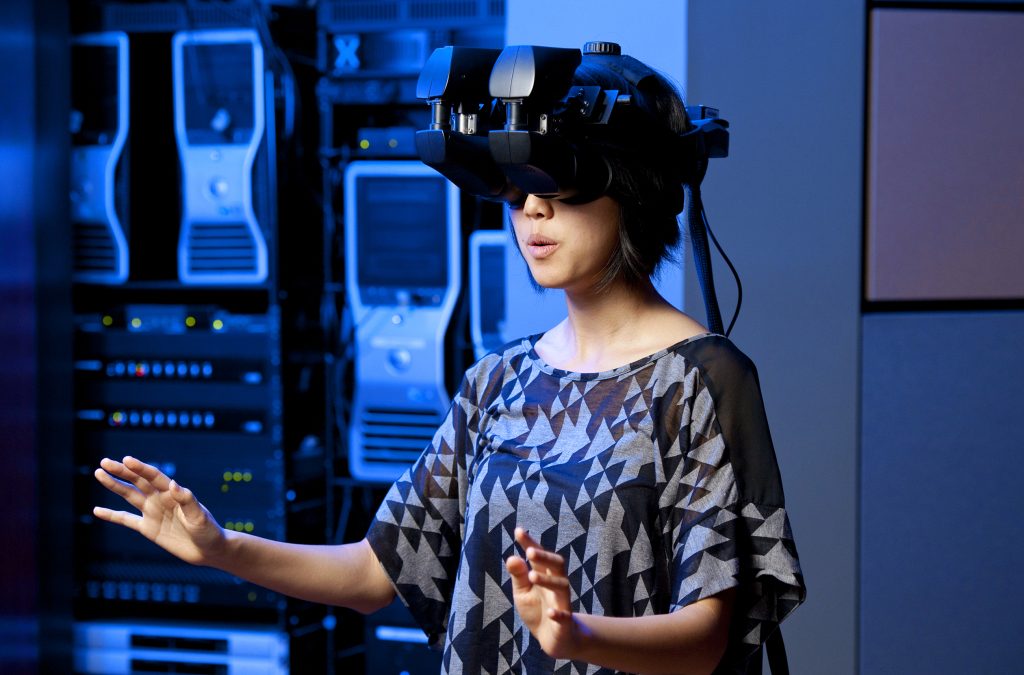
Source: Fortune.com
Big corporations are investing billions—but the technology may not play out the way they expect.
In mid-April, virtual reality passed a milestone. Using an app created by a company called Medical Realities, viewers from around the globe, each presumably with an iron constitution, witnessed a surgeon at the Royal London NHS Hospital delve into the bowels of a 70-year-old cancer patient. If that sounds like a Nova special, it was so much more. Doctors, medical students, and the merely curious experienced the operation in real time, with 360-degree control over their vantage points, as though they were actually in the operating room.
By now you’ve probably heard the hype about the coming wave of virtual reality (VR) and the miracles that it can render in videogames, entertainment, and exploration. Interested in flying a Black Hawk helicopter over the Dubai skyline just after dawn? It can put you there. How about walking in Neil Armstrong’s footsteps on the moon, or on the summit of Mount Everest? Done and done. But the live stream was a showcase of the wondrous potential of VR to educate, to train, and, more generally, to transport the masses into situations that would otherwise be impossible to experience.
It was a mere glimpse of what Medical Realities has in mind. Imagine, for example, enabling students to actually feel the resistance when a scalpel cuts muscle. For now, workplace applications for VR tend to be rather prosaic—think virtual conferencing—and much of the effort to create compelling content is focused on games and entertainment. But it provides a striking vision of the potential reach and practicality of VR in the future.
