
Source (complete article): BBC
This was one of the more unusual newsgathering trips I’ve ever been involved with – an experiment with BBC R&D and BBC News Labs. Not least because quite by chance we chose the busiest of days to start experimenting.
Had it not been for a strike by disgruntled French ferry workers this would have been another familiar day of cat and mouse for the migrants, lorry drivers and French police.
Instead, with the port of Calais closed and thousands of young men converging on the approach roads to the Eurotunnel terminal, their efforts to hitch a ride to England were played out in front of dozens of watching cameras.
Including ours, an all-seeing array of GoPros looked distinctly odd amid the more traditional crews.
I called it “The Blob”.
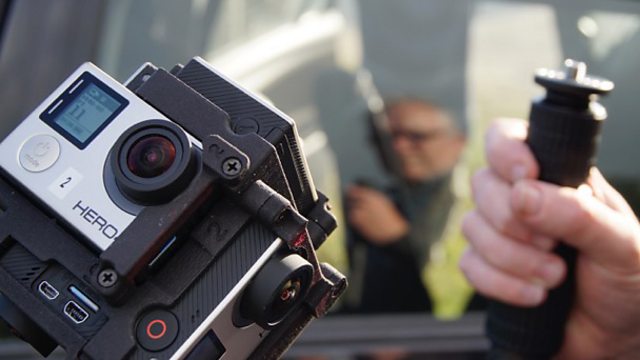 The Blob
The idea was to see whether a 360/immersive film would capture something that a regular news package could not.
Could immersive journalism bring a new degree of intimacy and connection to the images of migrants trying to board trucks and the dismal conditions in which they live when they’re not making their desperate efforts?
The technology is new and relatively untested in a breaking news environment. We couldn’t be sure what we would get.
But capturing good audio – interviews, pieces to camera and all-important ambient sound – would also be important. I think it’s fair to say we didn’t quite crack this part of the puzzle.
But as events unfolded rapidly around us, and editors in London realised they had an extra crew on the ground (which resulted in a steady stream of demands for interviews), we also had a crash course in how to integrate “The Blob” into the rest of our newsgathering efforts.